De la idei la conversație

Idei și observații despre claritate, decizii, AI, procese și felul în care lucrăm.

Texte de Alexandra Isbășoiu, publicate inițial pe LinkedIn.

33 postări · Pagina 4 din 7

English

I’m proud to announce that I am an AI developer. Well, I built something with AI. Let me explain.

I built an MCP integration that lets me check my invoices through chat: what I’ve received through NAFA, and what I’ve issued in my invoicing platform. Next, I want to make issuing an invoice through the conversation possible too.

I don't have a technical background. I’m not a developer, and seeing the integration work doesn’t tell me whether it’s secure or reliable.

Who can access the data? What happens if a request fails halfway through, or runs twice?

I know enough to ask some of these questions. I also know there are questions I haven’t thought to ask. Even a tool that’s “just for me” has access to real data. When we build products for other people, they’re trusting us with theirs too. I’d want a specialist involved before offering something like this to a client.

On the other hand, that can’t mean relying on someone to check thousands of AI-generated lines only at the end.

We need a process that includes their expertise throughout development: clear requirements, small changes they can review, agreed tests, and checkpoints before anything reaches real users.

Someone needs to own the decision that it’s ready, and what happens after release.

Understanding the business needs, understanding the work, and bringing in the right expertise at the right time give a project a much better chance of succeeding. Using AI myself to develop helps me have more practical conversations about both its possibilities and its risks.

I’m genuinely excited about what we can build with AI. I also think we need to recognise the limits of our own knowledge and involve people who can fill those gaps. Our customers and users deserve that care when they trust what we build with their work and their data.
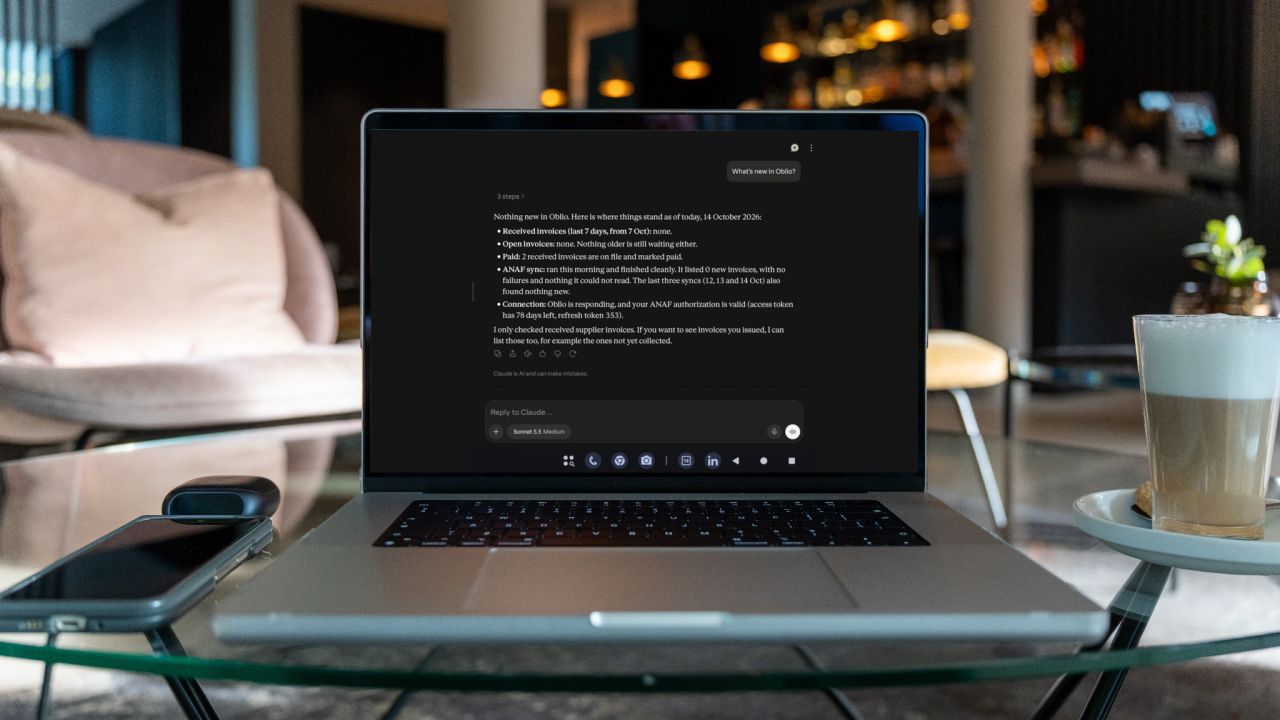

A laptop displaying an AI conversation, beside a coffee in a café.
English

Even a team of AI agents needs clear responsibilities and quality checks. And we need more women at tech events. There was plenty for me to think about while traveling last week and taking part in Shopware Hacktoberfest.

The week was full of teamwork, time with Sander Mangel and partners, and shared experiences. We worked together and exchanged ideas. It made me feel grateful for the team and the network I’m part of, and for what we can achieve together.

Those conversations continued at Hacktoberfest on Thursday and Friday.

Christian Dangl showed how he organises AI agents around defined roles and quality gates. They discuss and review each other’s work before presenting a decision or moving forward.

Coming from operations and project management, I found the process particularly interesting: who does the work, who checks it, and when it is ready to move forward. I also considered the cost of running those checks with this approach.

The Nexus workshop with 🤖 Albert Scherman and Assylzhan Nyussupov gave me the chance to try it myself. Without a developer background, I was able to build a workflow. Just a few nodes and configurations, and I had something working. I was excited by how easily I could get started.

I enjoyed Nicole Wolf’s conversation with Niklas D. about her journey into coding. There were very few women in the room, and I would love to see more women sharing their work and joining these conversations. I appreciate Shopware’s dedicated Women in Tech events and having Nicole’s experience included in the Hacktoberfest programme.

Thank you, Claudia Teubner, Carolin Bollmann and the Shopware team, for bringing everyone together. I came home with fresh ideas and a lot of appreciation for the people I got to know a little better.

A purple elephant mascot standing on a laptop.
English

A shop in Germany got my order because Gemini found the exact fountain pen I wanted. I’m in Romania, and I had no idea that shop existed. By the time I reached that shop, I knew exactly what I wanted and was ready to pay.

Getting there was an entire journey.

I’ve written with fountain pens since I started school. I got this passion from my mother, who has beautiful handwriting. When I started my PhD, I bought a Parker Sonnet with golden details. After finishing, I gifted it to her because she loved it so much.

Two weeks ago, I decided I needed a new one. To make sure I would actually buy it, I gave my mother again the one I already had. 😊

I had very precise requirements: a thicker body, a comfortable grip, a good nib, a darker colour and golden details.

I started with the Romanian market, comparing brands and asking Claude to help me understand the options. Some pens were too slim. One had silver details. Another was completely black, but a bit too sporty for my taste.

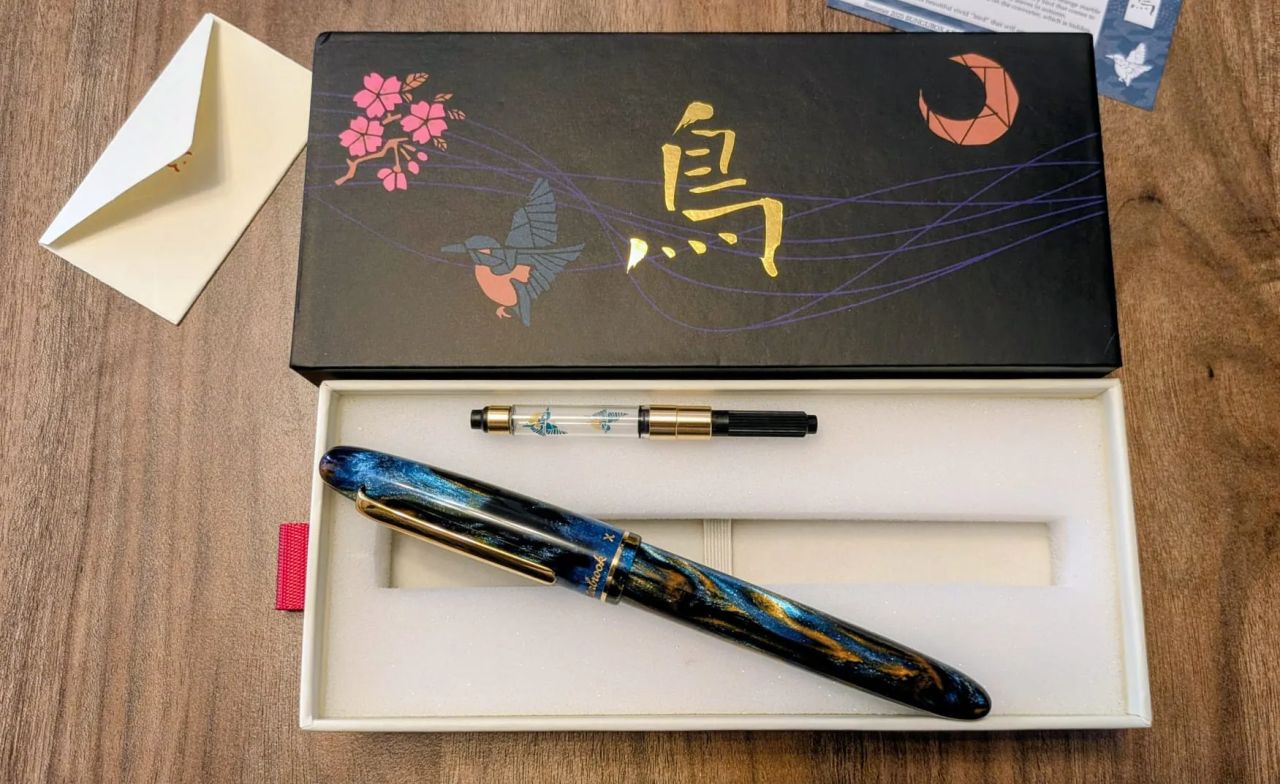
Then, during my research with AI, I found the Esterbrook × BUNGUBOX Kingfisher edition.

Anyone who knows me knows that kingfishers are my favourite birds. Photographing one in the Danube Delta is still one of my favourite moments.

Of course, from that point on, no other pen would do.

The problem was finding it with a medium nib.

I couldn’t find it in Romania. A shop in Athens had the model, but only with a broad nib. I considered ordering from Japan, but was concerned about delivery times and wanted the reassurance of buying within the EU.

So I asked Gemini to find this exact edition, with an M nib, in Europe.

It found a shop in Germany with what appeared to be the only matching pen available in Europe.

I checked the shop, read reviews, including on Reddit, and placed my order. With express delivery, the pen was in my hands in Romania in less than 24 hours.

I’m so happy holding it and writing with it. It made me realise just how much the right pen matters to me.

But working in e-commerce, I also couldn’t ignore how I had bought it.

AI had helped me research, compare, narrow down my requirements and find a retailer I would otherwise never have known.

This is why making your shop findable through LLM search deserves attention now.

The exact model, available nib, stock, price and delivery destinations all led to my purchase. Your product pages and product data need to make those details accessible and clear enough for search systems and AI assistants to match them to a customer’s request.

In my case, the nib size decided whether a shop could get the order.

If someone asks an AI assistant for a product you sell, with requirements as specific as mine, can it find the right version in your shop?

The blue and gold Esterbrook Kingfisher fountain pen in its presentation box.
English

It's Tuesday morning. The customer review deck is open, you're two slides in, and you just got a Slack message. You answer it. Another lands 2 minutes later. By 6pm you've touched 10 things and can't say what you actually finished.

Everyone I talk to this year wants to automate something. Good instinct, but only if you already know what you're automating. Messy data or unclear steps will just move the mess faster. Time management runs on the same logic: without structure, prioritization, or the ability to say no, a system won't fix it. You just get better at organizing chaos.

Microsoft's research found close to half of employees, and more than half of leaders, saying their work feels chaotic and fragmented. Gloria Mark's research at UC Irvine puts the recovery cost at over 23 minutes per interruption. A 2022 Harvard Business Review study found people toggle between apps close to 1,200 times a day. Task switching in general can eat up to 40% of your productive time, per the American Psychological Association's research.

Is this rhythm even sustainable? Probably not.

And it's the same causes, every time: not knowing how to say no, too many small disconnected tasks landing at random, no system for tracking where your time goes, a culture that rewards whoever answers fastest over whoever thinks best.

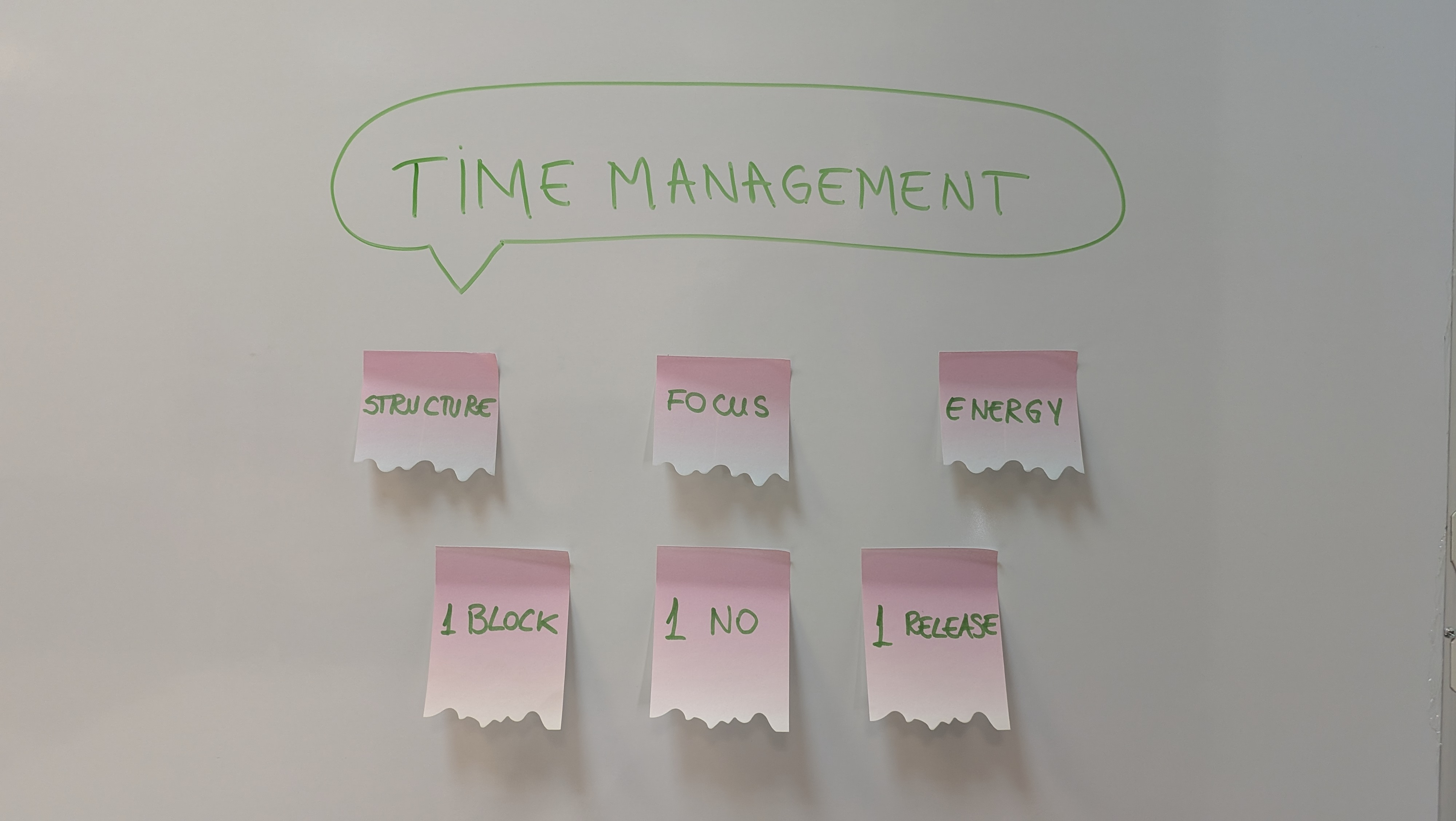
Three things can fix this, in order: - Protect your structure: calendar, planning, timeboxing, grouping similar work. - Protect your focus: deep work blocks, an environment that isn't pinging you every 2 minutes, finishing before you switch. - Protect your energy: know your priorities, say no on purpose, delegate with authority, ask for help early.

Automation only pays off once those 3 hold. Saving 30 minutes with a tool means nothing if the rest of your day is still leaking everywhere else.

You can start with these small changes that will compound faster than any tool: - One protected block: 90 minutes, peak hours, defended. One becomes two quicker than you expect. - One honest no: a single moment where the old answer would have been yes, and you give a different one instead. - One thing released: delegated with full context and authority, watched from a distance, not rescued.

So Monday morning, before anything else: open your calendar, check where the time is for the work that matters. If you can't find it, block 90 minutes. Run a 15 minute planning session, name 3 priorities, give each one a block. Only then, open your email and start your day with a clear plan.

Time management whiteboard: Structure, Focus, Energy; 1 Block, 1 No, 1 Release.
English

We didn't know the answer, and that was the best part of the meeting. We'd just wrapped a demo. My colleague opened the floor for questions, and the client came at him with one after another. He handled most of them well, calm and quick. Then one landed that neither of us had covered. My first thought: we don't know this, we need to check.

This is the moment consultants panic. There's a culture that says we're paid to have every answer, so admitting we don't feels like failure.

My colleague didn't. He said, "That I'll need to check and get back to you!" No hesitation. Nothing that read as uncertainty, and nothing that suggested he was worried about how it would look.

I couldn't be prouder. That's how you recognize a trustworthy consultant: someone who won't pretend to know what and when they don't.

Quality consultancy means giving the client exactly what they need, even when that isn't the answer you walked in with. It means saying "let me get back to you with the right information" instead of guessing your way through.

It goes one step further. Sometimes the strongest thing you can say is "talk to this person, they're part of our network, they know this better than I do." That takes more confidence than bluffing ever will. It means the client's outcome matters more to you than closing the deal in that moment.

So next time a question catches you without an answer, try this: - Take a breath. - Tell the client you'll research it properly and come back with something that serves their actual goal. - Give them a date. - Walk them through the steps you'll take, even if that means bringing in a subject matter expert. - Follow through, and where it fits, bring the answer back live, in a new session.

None of this cancels your expertise. Taking the time to check shows your client that their outcome comes before your comfort.

I messaged my colleague on Slack right after the meeting: "Bravo. That was the right answer."