De la idei la conversație

Idei și observații despre claritate, decizii, AI, procese și felul în care lucrăm.

Texte de Alexandra Isbășoiu, publicate inițial pe LinkedIn.

33 postări · Pagina 3 din 7

Română

Pe 1 și 2 noiembrie particip la AI Expo Europe, în București.

Când discutăm despre AI, pornesc de la câteva întrebări foarte concrete: ce problemă încercăm să rezolvăm? Ce trebuie să rămână în responsabilitatea unui om? Și cum vom ști că noul mod de lucru ne ajută?

Sunt întrebări care ne ajută să trecem de la o idee interesantă la o decizie potrivită pentru business.

Română

Astăzi vă prezint, în sfârșit, Open Studio 17, un proiect care îmi e atât de drag. Este creat din dorința de a face lucrurile pornind exclusiv de la nevoile clienților. Care devin, astfel, parteneri.

Pentru mine, asta înseamnă să înțelegi ce se întâmplă într-o afacere înainte să propui o soluție. Să asculți oamenii care lucrează acolo, să pui întrebări și să alegi alături de ei ce merită schimbat. Să fie un parteneriat în care furnizorul și beneficiarul merg împreună la drum, nu separat, rece, contractual și atât.

Numele are o poveste personală. „Studio” vine din dragostea mea pentru fotografie, deși Open Studio 17 este o companie de IT, consultanță și implementare. Iar „17” este pentru fiul meu, născut pe 17 mai. Am ales „Open” tocmai pentru că eu cred în deschidere și transparență, chiar și când lucrurile sunt dificile. Deseori, e mult mai util să fii direct decât delicat.

Împreună cu o echipă de experți, lucrez cu fondatori și echipele lor pentru a aduce mai multă claritate în decizii și pentru a pune planurile în practică. Uneori asta înseamnă AI și automatizare. Alteori, un proces regândit sau sprijin în implementare.

Ne dorim să construim colaborări în care să putem vorbi deschis despre ce funcționează, ce ne încurcă și ce ar ajuta cu adevărat.

Ne găsiți aici: https://lnkd.in/dc4YPf2a

Iar pe pagina Open Studio 17 vom împărtăși idei, întrebări și lucruri care ne frământă pe mulți în business. Mi-ar plăcea să ne urmăriți și acolo.

English

I tend to talk a lot when I use voice typing (and in general, my friends would say). More context, more explanations, more details. In my mind, that should lead to a better result. At Shopware Hacktoberfest, Martin Bens' talk gave me another question to ask: what should the AI agent leave alone?

Sander and I discussed this in The Open Podcast episode about the event. In this clip, I talk about defining non-goals and setting clear boundaries.

What are we trying to achieve? What is outside the scope? Where should the work stop?

These are familiar questions in operations and project management. They are just as useful when we work with AI. We can describe the goal in detail and still leave too much room for assumptions, extra work or changes we never asked for.

Thank you to Shopware for bringing us together at Hacktoberfest, to Martin for the session, and to Sander for the conversation.

Full episode in the comments ⬇️

Citește subtitrările

This was very interesting for me because now with voice typing I tend to yap and talk and talk a lot and give a lot of context because in my mind it is that more context means better output. However, it was very interesting how how Martin came in and said, How about defining the non-goals? How about looking at what they don't need to do and make sure that your scope is clear and you have clear boundaries?

English

My family and friends joke that I have a spreadsheet for everything. After my first two days at BISM - Bucharest International School of Management, I have a few more questions to put alongside those spreadsheets. 😊

Yesterday, I started the Fast Track Management Program. After a B.A., two M.A.s, a Ph.D. and years of learning alongside work, I’m excited to be back in a classroom.

Today, one of our self-assessment exercises gave me a score of 92% towards analytical thinking. I knew I leaned that way, but seeing how strongly it came through was a real surprise. I recognised myself in it: exploring scenarios, organising information and wanting to understand the consequences before making a decision.

That approach has served me well in my work. The discussion gave me a useful opportunity to think about how I apply it. When would another question improve a decision? When do I already have enough information to act?

We also explored how different our priorities and boundaries can be. Understanding people’s needs is central to what I do, and there is always room to become more precise in how I ask, listen and check my assumptions. A solution needs to make sense to the people involved, taking their values and limits into account.

I’m grateful for the openness in the room and the perspectives people are bringing. I’m starting this program with experience I value, plenty of curiosity and real excitement about what comes next.

I care about the people who trust me and the projects I’m responsible for. Continuing to learn is part of how I honour that trust. I'm already thinking about what I'll do differently on Monday.

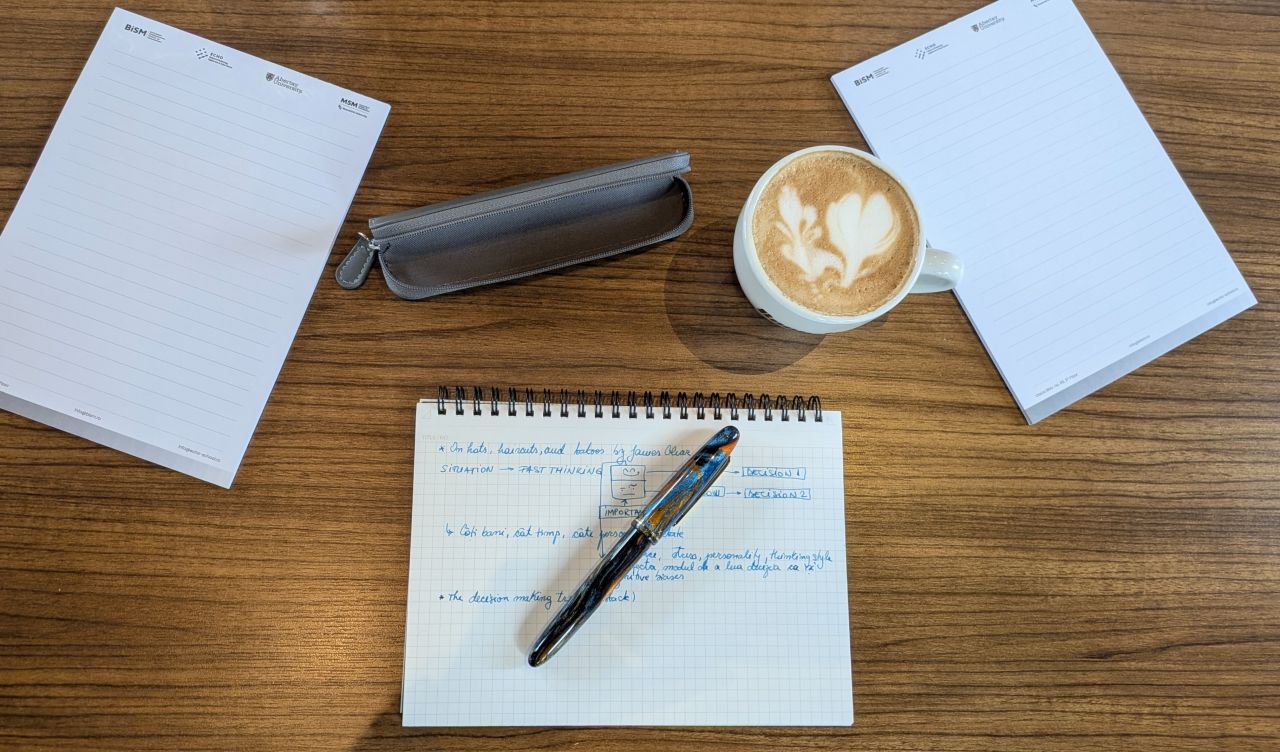
BISM notepads, a handwritten notebook, fountain pen and coffee on a desk.
English

After Shopware Hacktoberfest, I kept coming back to one question: how do we get more women into these rooms? Listening to Nicole Wolf talk with Niklas D. about being treated as though she didn’t belong in the profession because she’s a woman, I recognised something from my own experience.

She described sharing technical explanations of Redis and Docker online, only to have men explain the same things back to her, as though her explanation needed their confirmation. Instead of discussing the topic, she found herself defending her right to discuss it.

That’s a frustrating use of anyone’s time and knowledge.

I’ve had moments when I felt I had to repeat my opinion to be heard, too. I’ve also had a lot of support from the men I work with. Both are part of my experience. Acknowledging one doesn’t diminish the other.

At many tech events, I notice how few women are there. I wonder how much that affects someone deciding whether to join for the first time. Seeing other women speaking, asking questions and sharing their work could make that first step feel easier.

What I’d like to see is more women sharing what they build, what they know, what worked and what didn’t. And more invitations and encouragement to do that. I know encouragement has made a difference for me.

I’d especially like to see more space for these conversations within the larger tech events. Nicole’s session at Hacktoberfest brought that experience into a room where we could all hear it and think about it. Having more women on those stages, contributing to the main agenda, feels like a practical place to start.

I also appreciate that Shopware keeps creating opportunities for women in the community to meet and exchange experiences. Their next Women in Tech & Ecommerce event is on November 12 in Cologne. I’ll leave the link in the comments. Carolin Bollmann, Claudia Teubner, thank you for making it happen!

What have you seen make it easier for more women to join in and share their work at tech events?

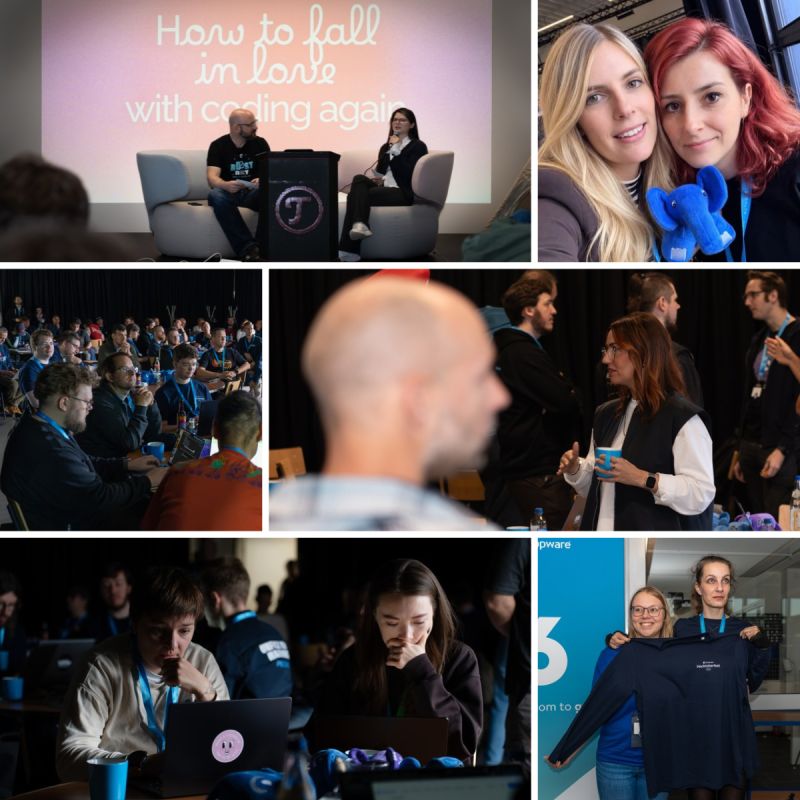
Six photos from Hacktoberfest: the coding discussion, a selfie, the audience, networking, a workshop and a Shopware shirt.