It's Tuesday morning. The customer review deck is open, you're two slides in, and you just got a Slack message. You answer it. Another lands 2 minutes later. By 6pm you've touched 10 things and can't say what you actually finished.
Everyone I talk to this year wants to automate something. Good instinct, but only if you already know what you're automating. Messy data or unclear steps will just move the mess faster. Time management runs on the same logic: without structure, prioritization, or the ability to say no, a system won't fix it. You just get better at organizing chaos.
Microsoft's research found close to half of employees, and more than half of leaders, saying their work feels chaotic and fragmented. Gloria Mark's research at UC Irvine puts the recovery cost at over 23 minutes per interruption. A 2022 Harvard Business Review study found people toggle between apps close to 1,200 times a day. Task switching in general can eat up to 40% of your productive time, per the American Psychological Association's research.
Is this rhythm even sustainable? Probably not.
And it's the same causes, every time: not knowing how to say no, too many small disconnected tasks landing at random, no system for tracking where your time goes, a culture that rewards whoever answers fastest over whoever thinks best.
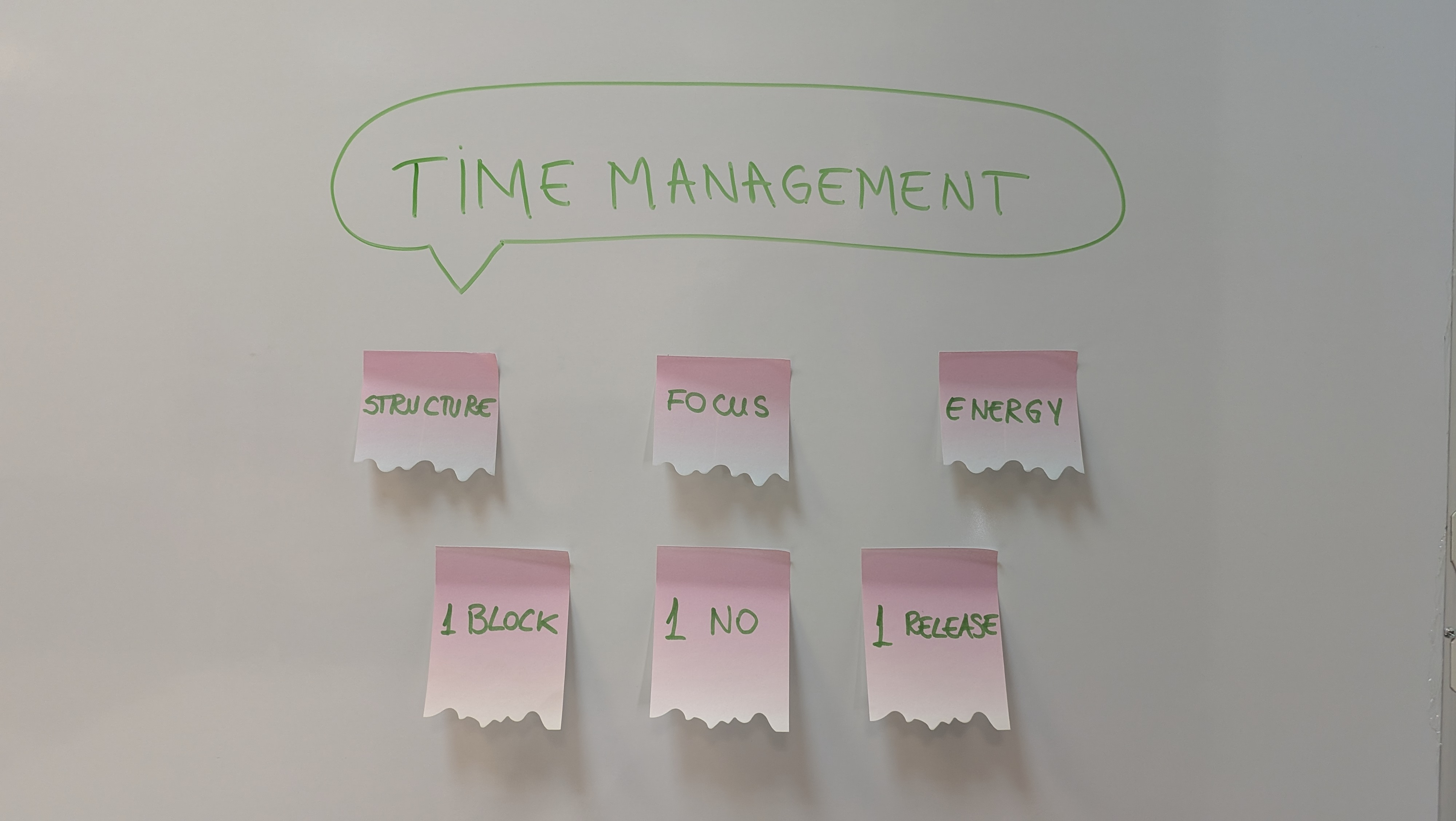
Three things can fix this, in order: - Protect your structure: calendar, planning, timeboxing, grouping similar work. - Protect your focus: deep work blocks, an environment that isn't pinging you every 2 minutes, finishing before you switch. - Protect your energy: know your priorities, say no on purpose, delegate with authority, ask for help early.
Automation only pays off once those 3 hold. Saving 30 minutes with a tool means nothing if the rest of your day is still leaking everywhere else.
You can start with these small changes that will compound faster than any tool: - One protected block: 90 minutes, peak hours, defended. One becomes two quicker than you expect. - One honest no: a single moment where the old answer would have been yes, and you give a different one instead. - One thing released: delegated with full context and authority, watched from a distance, not rescued.
So Monday morning, before anything else: open your calendar, check where the time is for the work that matters. If you can't find it, block 90 minutes. Run a 15 minute planning session, name 3 priorities, give each one a block. Only then, open your email and start your day with a clear plan.